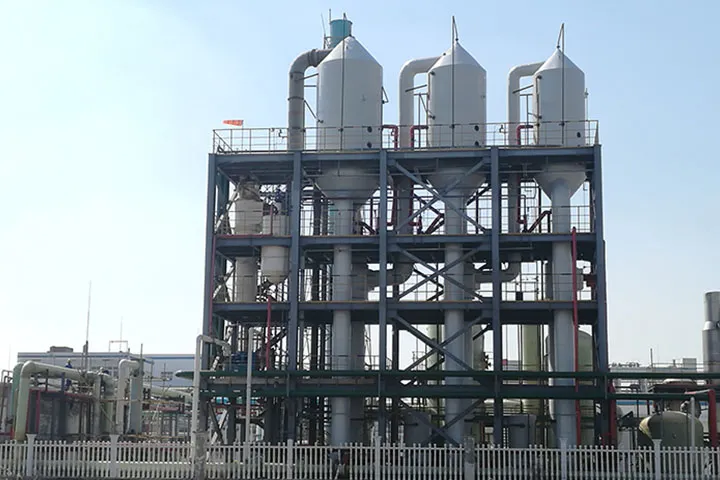
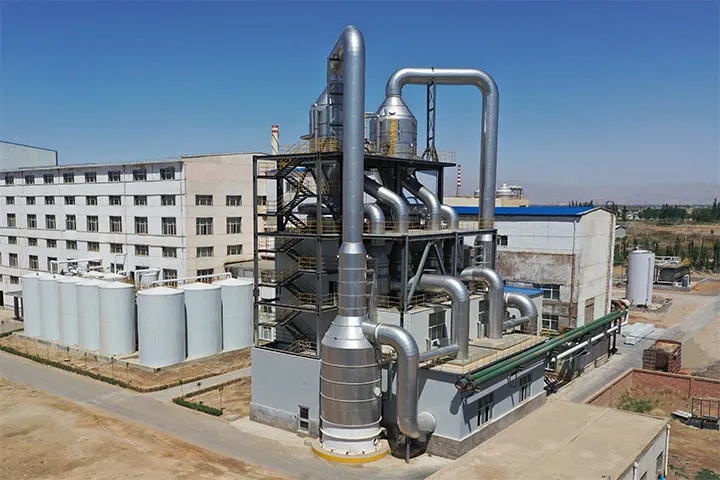
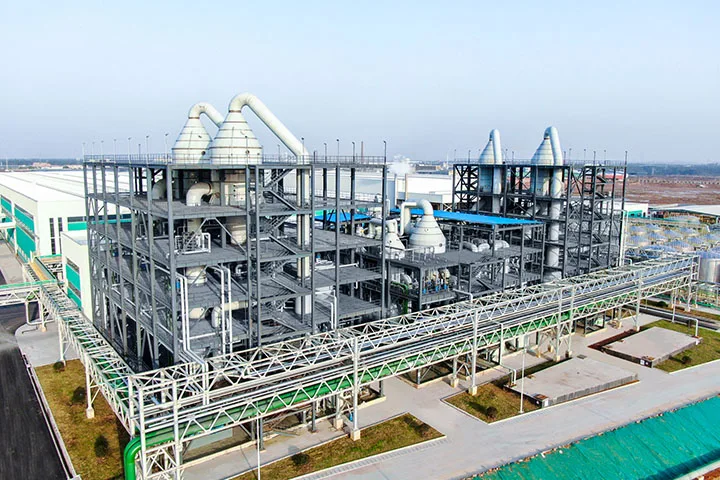
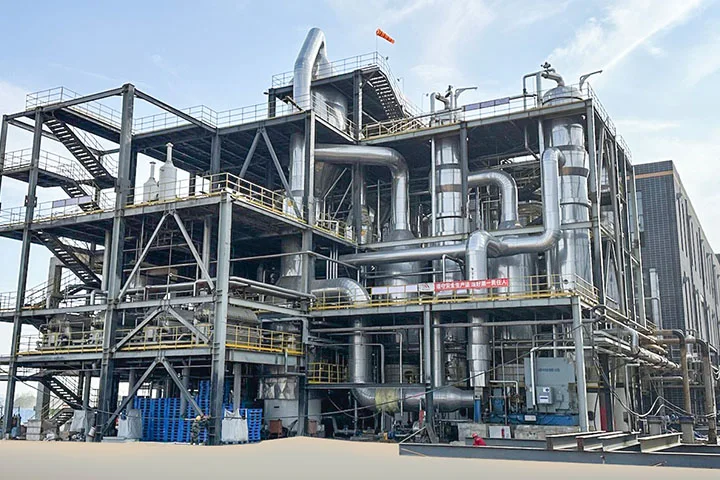

When I help customers select an evaporator, I often find that the initial problem is not insufficient capacity but incomplete process data. A low-price unit may later create scaling, product-quality, or downtime risks. I reduce that uncertainty by connecting material behavior, treatment objectives, downstream requirements, and lifecycle cost before comparing equipment options.
The right evaporator depends on feed composition, viscosity, scaling tendency, heat sensitivity, corrosion risk, treatment objectives, and downstream requirements—not capacity alone. I first define whether the process needs concentration, water recovery, crystallization, salt separation, or resource recovery. I then compare suitable evaporation routes by energy use, operating stability, cleaning needs, product quality, and total lifecycle cost.
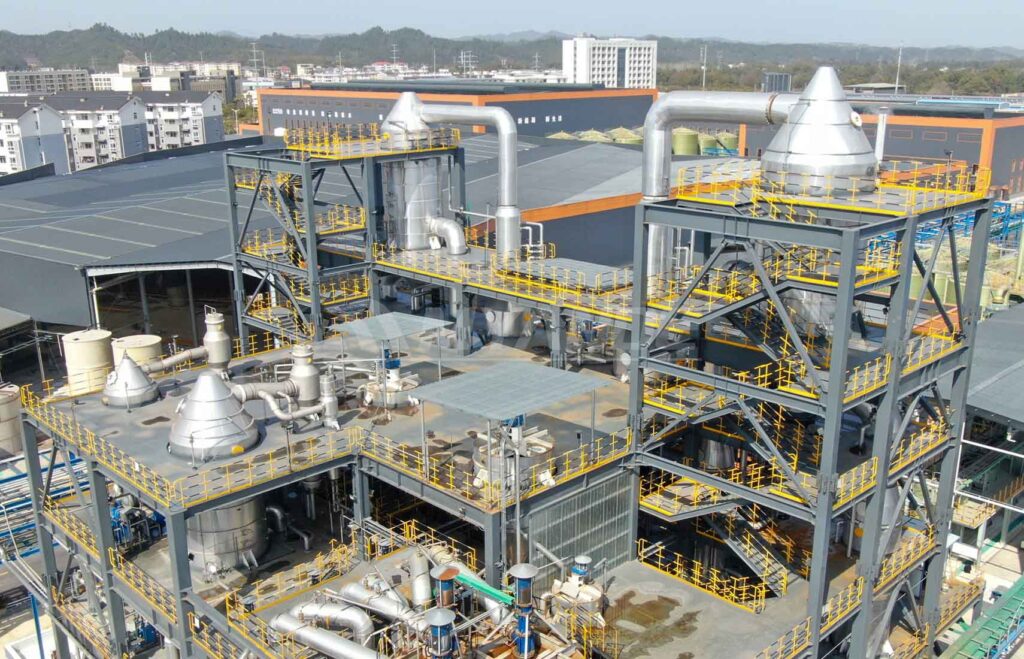
I use this approach because an evaporator is rarely an independent machine. It must receive a suitable feed from upstream equipment and produce a stream that downstream crystallization, separation, product finishing, or disposal systems can handle. The following evaluation steps help plant teams reduce process risk before they issue a purchase specification.
Should I start evaporator selection with material analysis?
Many buyers begin with a target such as “10 tonnes per hour of water evaporation.” I understand why that number seems practical, but it does not describe how the material will behave. I start with the feed because composition and physical properties determine whether a proposed heat-transfer and circulation arrangement can operate reliably.
What feed data should I collect first?
I recommend collecting representative data for concentration, temperature, viscosity, density, dissolved solids, suspended solids, pH, corrosiveness, heat sensitivity, foaming, boiling-point elevation, and scaling tendency. I also ask whether the feed composition changes during a campaign. These factors help determine the evaporator type, materials of construction, residence time, circulation method, and cleaning strategy.
Why does material behavior change the equipment choice?
I have seen customer discussions move quickly toward capacity and heating area before anyone had confirmed the feed’s final concentration. That sequence can create serious problems.
Viscosity and circulation
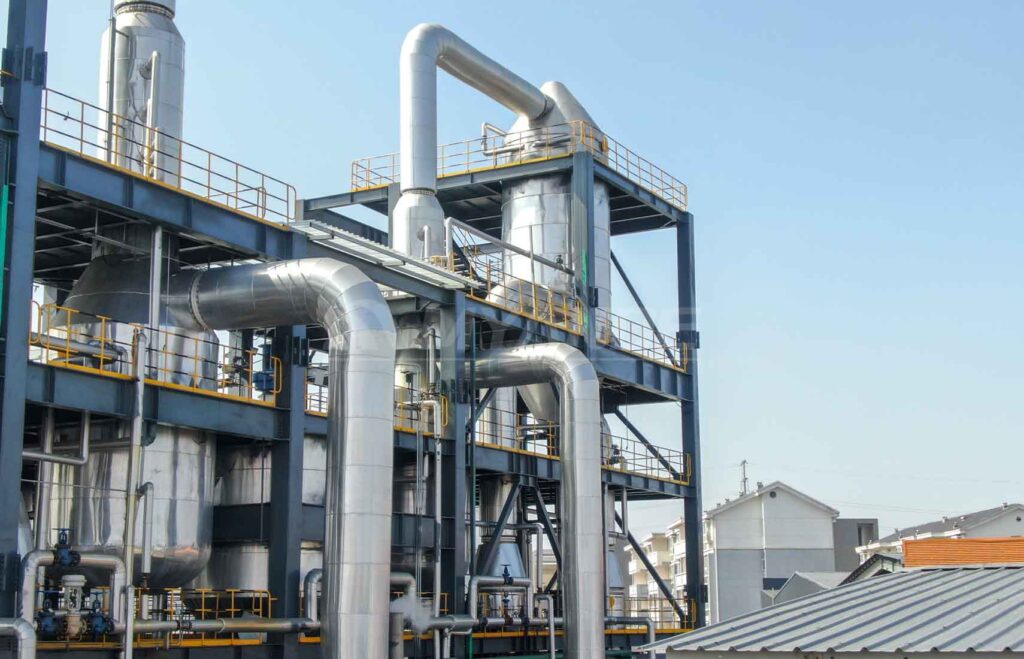
As water leaves the solution, viscosity may increase sharply. A falling-film evaporator can be attractive for low-viscosity feeds and short residence times, but a highly concentrated or viscous stream may distribute poorly across heating surfaces. A forced-circulation arrangement may provide better control when the material needs stronger movement through the heat exchanger.
Scaling and fouling
Scaling can reduce heat transfer, increase energy consumption, and force unplanned shutdowns. I evaluate:
– The solubility of each important salt.
– The concentration point at which precipitation begins.
– Whether crystals form on heating surfaces or remain suspended.
– The expected cleaning frequency.
– The ability to isolate and clean individual sections.
A material that appears manageable at the feed inlet may become difficult near the outlet. I therefore pay particular attention to the most concentrated liquor, not only the original feed.
Heat sensitivity and corrosion
Food, fermentation, and biochemical products may lose quality when they experience excessive temperature or long residence time. I also consider whether the feed contains chlorides, organic acids, solvents, or other corrosive components. Material selection should follow verified process conditions and qualified engineering review. Buyers should request material certificates and inspection records, but they should also confirm that the proposed alloy is suitable for their own chemistry.
Which evaporator process objective should I define first?
A customer may describe a project as “wastewater evaporation,” but that phrase can hide several different objectives. I define the desired outcome before I compare MVR, multiple-effect, TVR, waste-heat, or other routes. Each objective creates different technical and commercial success criteria.
How do process objectives affect equipment selection?
If I need only moderate concentration before a downstream process, I may prioritize simple operation and low residence time. If I need high water recovery, I must examine vapor recompression, condensate quality, and the final concentrated liquor. If I need crystals or separated salts, the project becomes an integrated evaporation-crystallization problem rather than a conventional concentration duty.
What objectives should buyers distinguish?
I normally separate the project objective into one or more of these categories:
| Primary objective | Main evaluation criteria |
| Product concentration | Final concentration, quality, residence time, product recovery |
| Water recovery | Condensate quality, energy use, reuse destination |
| Crystallization | Supersaturation control, crystal size, solids handling |
| Salt separation | Selectivity, solubility differences, purity, mother-liquor management |
| Zero liquid discharge | Final solids, mother liquor, disposal route, operating cost |
| Resource recovery | Product value, purity, recovery rate, downstream processing |
A useful example comes from high-salt wastewater. The buyer may initially focus on achieving zero liquid discharge. However, if sodium chloride and sodium sulfate can be separated and recovered, the process may have a different economic value. I would then evaluate evaporation, crystallization, separation, drying, and product handling together.
Why is “maximum concentration” not always the best target?
The highest possible concentration may increase viscosity, scaling, pump load, and cleaning frequency. It may also reduce the quality of the recovered product. I ask what the downstream unit actually needs. A lower concentration leaving the evaporator may create a more stable total process if the next stage is designed to complete crystallization or separation.
How should I integrate the evaporator with the rest of the plant?
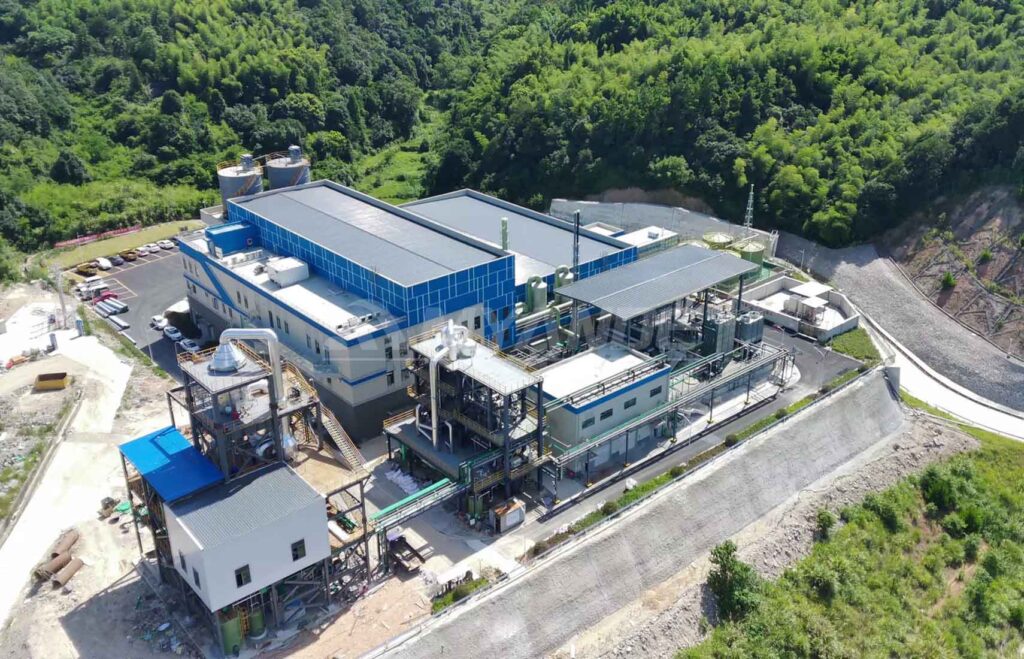
A standalone evaporator specification can look complete while leaving important interfaces undefined. I evaluate the feed tank, pretreatment, vapor system, condensate handling, crystallizer, centrifuge, dryer, mother-liquor return, and final disposal route. This system view prevents one unit from transferring its operating problem to another unit.
What upstream and downstream interfaces matter most?
Upstream equipment must provide a reasonably stable feed rate and composition. Screens, filters, pH adjustment, or pretreatment may be necessary when suspended solids or reactive components could damage the evaporation section. Downstream equipment must accept the actual concentrate, not an assumed laboratory composition.
How do I check system compatibility?
I use a process balance to connect each major stream. At minimum, I want to understand:
1. Feed mass flow and composition.
2. Water removed at each stage.
3. Vapor and condensate destinations.
4. Solids formed during concentration.
5. Mother-liquor circulation or purge.
6. Product recovery and final waste quantity.
7. Utility demand under expected operating conditions.
I also check control logic. A stable system needs appropriate measurements for temperature, pressure, level, density, conductivity, flow, and sometimes vibration or differential pressure. Automation does not correct a fundamentally unsuitable process route, but good instrumentation helps operators identify deviation before a blockage or quality failure occurs.
Evaporation and crystallization are connected
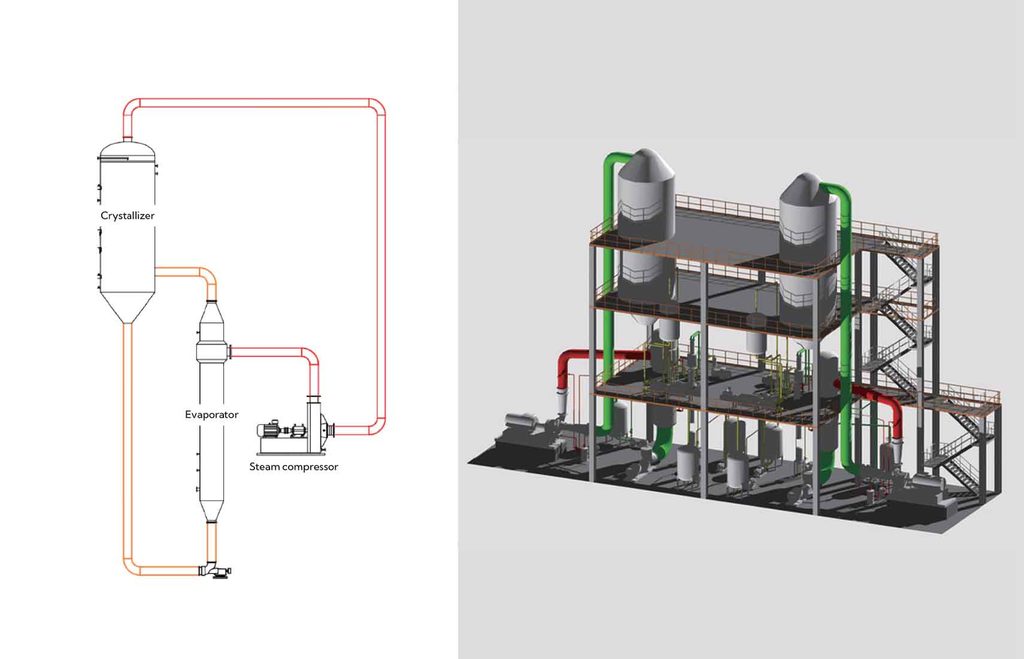
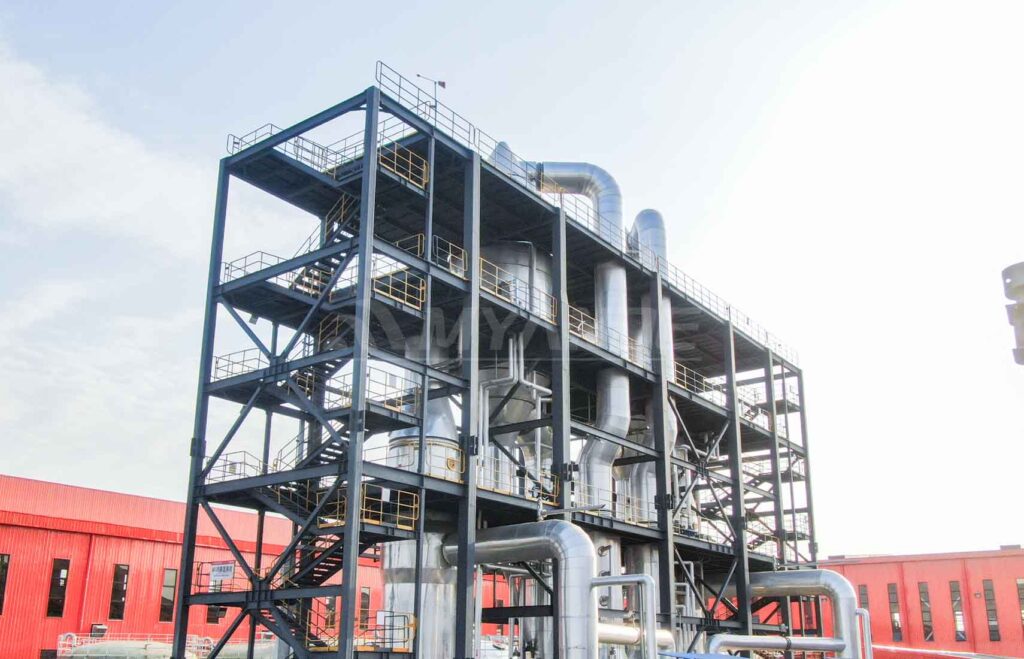
When solids begin to form, the question changes from “How much water can the evaporator remove?” to “Where should crystals form, and how should I control them?” A forced-circulation evaporator, OSLO crystallizer, DTB crystallizer, cooling crystallizer, freezing crystallizer, or flash system may be appropriate in different situations. I do not treat any one route as universally superior.
For high-salt or lithium-related applications, the valuable result may depend on purity, crystal size, mother-liquor composition, and recovery rate. These requirements often determine the evaporation endpoint and separation method.
How can I compare evaporator lifecycle economics and operating risk?
A low purchase price can be attractive during budget approval, but it may not represent the lowest cost over the equipment’s life. I compare energy consumption, availability, cleaning, spare parts, labor, product losses, wastewater handling, and expected operating conditions. I also ask suppliers to state the assumptions behind their performance figures.
What should a lifecycle comparison include?
I recommend comparing at least the following items:
– Electricity consumption, especially for MVR systems.
– Fresh steam consumption for MVR, multiple-effect, or TVR routes.
– Heat-transfer area and expected fouling margin.
– Cleaning frequency and cleaning chemical use.
– Planned and unplanned downtime.
– Pump and compressor maintenance.
– Corrosion allowance and materials of construction.
– Product or salt recovery value.
– Condensate reuse or treatment cost.
– Final residue disposal cost.
– Operator training and local service support.
How do I compare technologies fairly?
I avoid comparing nominal evaporation rates without a common basis. A fair comparison uses the same feed conditions, outlet targets, utility prices, operating hours, ambient conditions, and reliability assumptions.
| Cost or risk area | Questions I ask suppliers |
| Energy | What are the steam and electricity assumptions? |
| Stability | What feed variation can the system tolerate? |
| Fouling | What cleaning interval is expected, and how was it estimated? |
| Availability | Which components limit continuous operation? |
| Product quality | What temperature and residence-time conditions apply? |
| Maintenance | Which parts require regular replacement? |
| Scope | Are automation, installation, commissioning, and training included? |
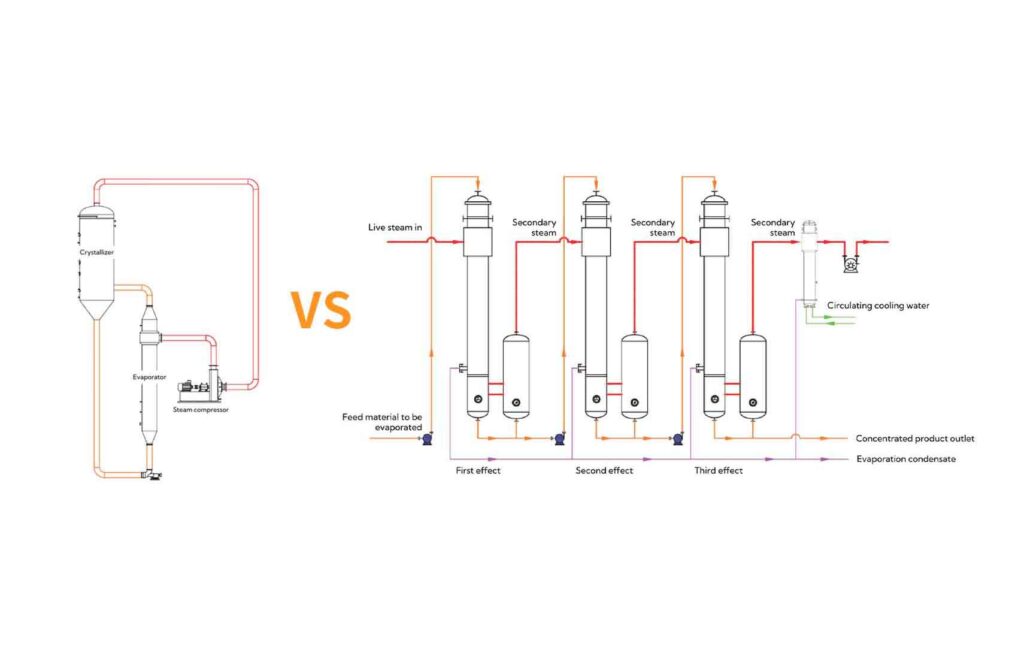
MVR may reduce fresh steam demand by recovering and compressing secondary vapor, but its economics depend on electricity price, operating hours, temperature lift, feed conditions, and system design. Multiple-effect evaporation may suit a project with available steam or particular temperature requirements. Waste heat can be valuable when its source is stable and compatible with the process. I evaluate these factors rather than promoting one technology as the automatic answer.
During customer support, I have found that the most useful supplier discussions focus on failure modes. I ask what happens if the feed becomes more concentrated, the scaling rate increases, the compressor trips, or the downstream centrifuge stops. A qualified supplier should explain protection logic, bypass arrangements, cleaning procedures, and restart requirements. Buyers should also verify references, quality records, inspection documents, and certifications directly rather than treating them as substitutes for application-specific engineering review.
Frequently Asked Questions
1. Is a larger evaporator always better?
No. An oversized evaporator may increase capital cost, reduce turndown performance, and create unstable heat-transfer conditions at low load. I recommend sizing the system around verified feed variability, operating hours, future expansion, and the required outlet condition rather than selecting the largest nominal capacity.
2. Is MVR always the most energy-efficient evaporator option?
No. MVR can reduce fresh steam use, but electricity demand, temperature lift, operating hours, feed properties, and compressor conditions affect the result. I compare MVR with multiple-effect, TVR, waste-heat, and hybrid routes using the same process and utility assumptions.
3. When should I combine an evaporator with a crystallizer?
I consider a combined system when the process must produce crystals, separate salts, achieve high water recovery, or approach zero liquid discharge. The evaporator should deliver a controlled stream to the crystallizer, while the crystallizer and solids-separation equipment must influence the selected evaporation endpoint.
4. What information should I send to an evaporator supplier?
I would provide feed flow, composition, temperature, concentration, viscosity, density, suspended solids, pH, corrosive components, heat sensitivity, scaling history, utility conditions, desired outlet quality, operating schedule, and downstream requirements. Representative samples and reliable laboratory data can improve the process evaluation.
Conclusion
Selecting the right evaporator requires more than matching a water-removal rate to equipment capacity. I begin with material behavior, define the actual treatment objective, connect evaporation with crystallization and separation, and compare energy, maintenance, cleaning, downtime, and recovery value across the equipment lifecycle. Myande can support customers with process analysis, route development, equipment engineering, automation, system integration, commissioning, and training. Contact our technical team with your material and process data for a qualified project evaluation.