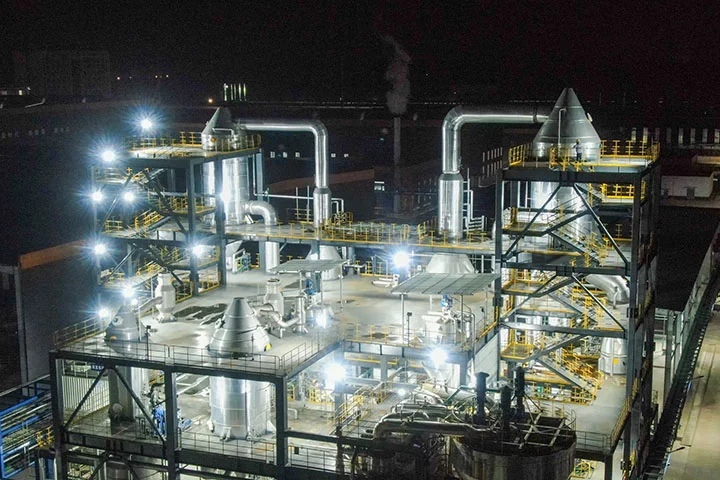
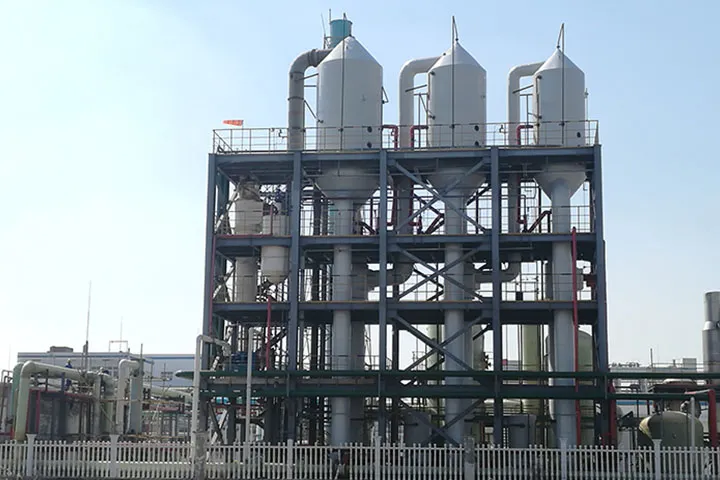
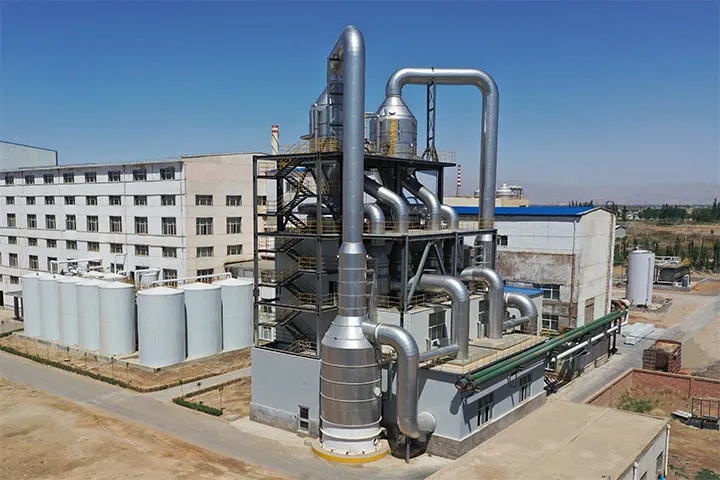
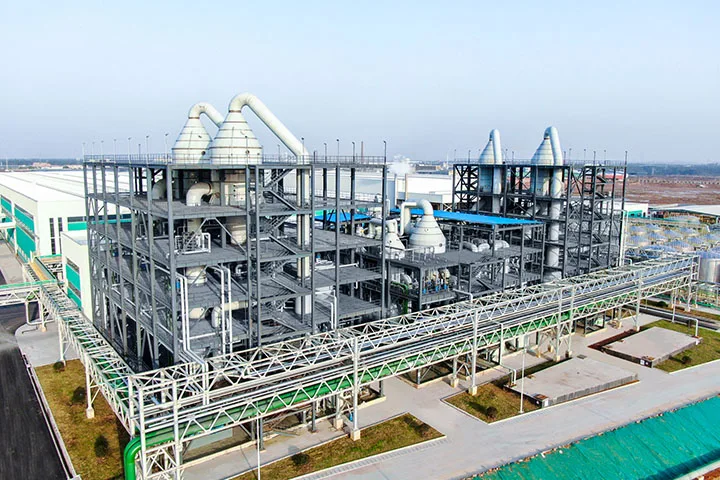
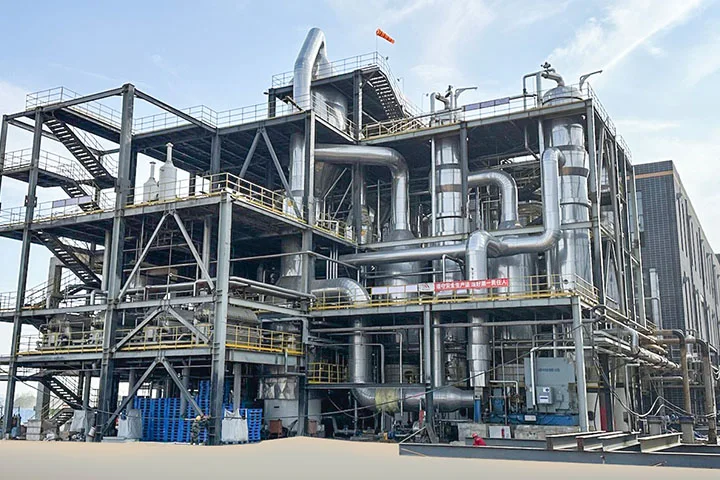
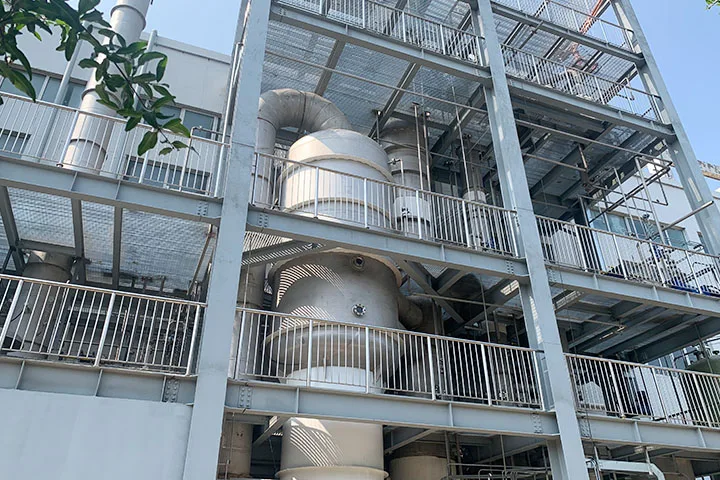
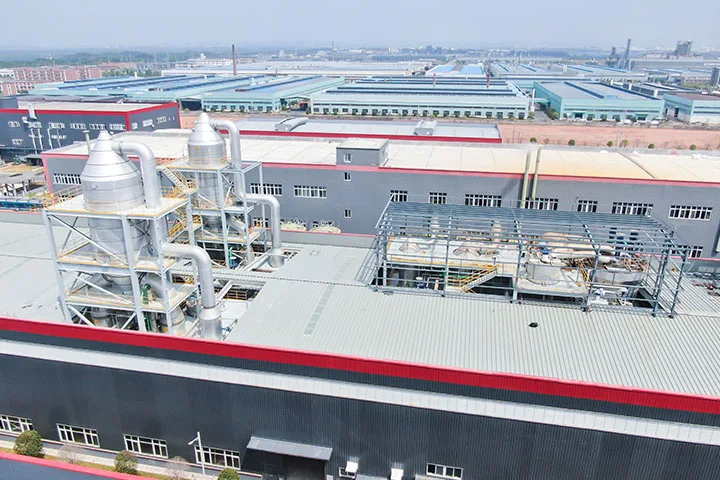
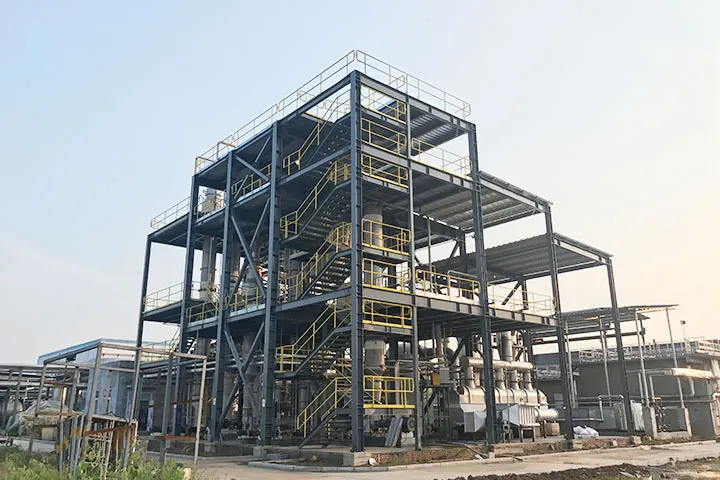

When I evaluate an MVR falling film evaporator, I do not begin with the equipment name. I begin with the material, capacity, energy prices, fouling risk, and product requirements. Many buyers want lower energy consumption, but an unsuitable feed can turn an efficient evaporator into a maintenance and operating problem.
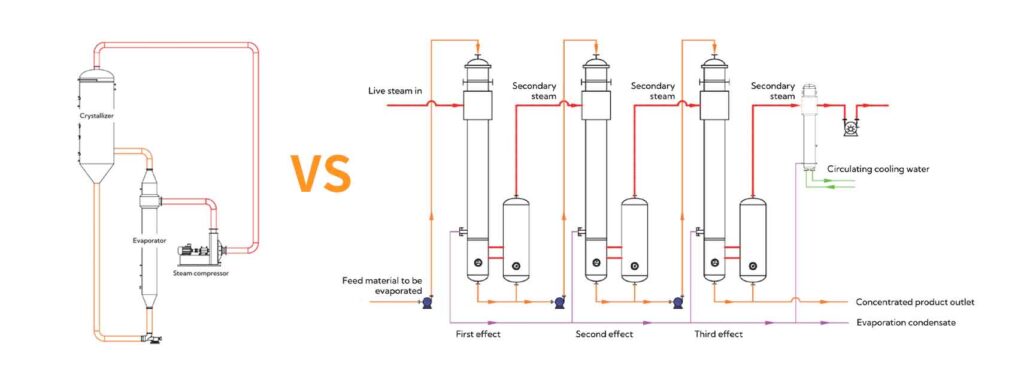
An MVR falling film evaporator uses mechanical vapor recompression to recover secondary vapor as heating steam. The feed flows as a thin film over heated tubes, while the recompressed vapor supplies heat for continued evaporation. This design can reduce fresh-steam demand and support compact, continuous operation, but its suitability depends on viscosity, scaling, foaming, heat sensitivity, concentration, electricity prices, and the complete process route.
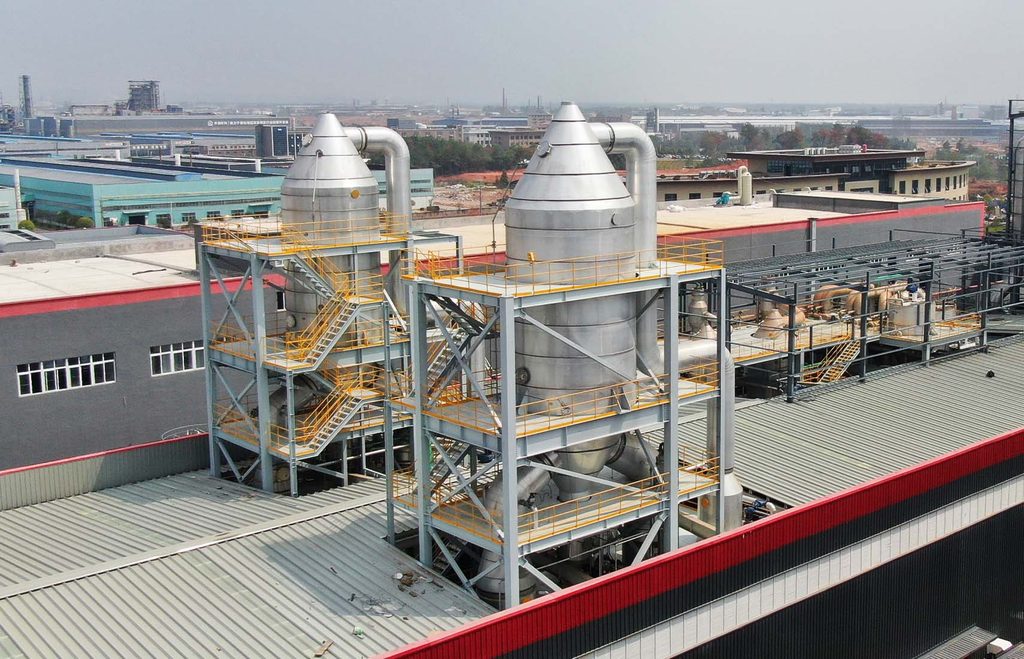
In my pre-sales discussions, I have found that the most important question is not whether MVR technology is advanced. The more useful question is whether falling-film evaporation matches the customer’s material and downstream process. The following evaluation points help technical teams make that decision.
How Does an MVR Falling Film Evaporator Work?
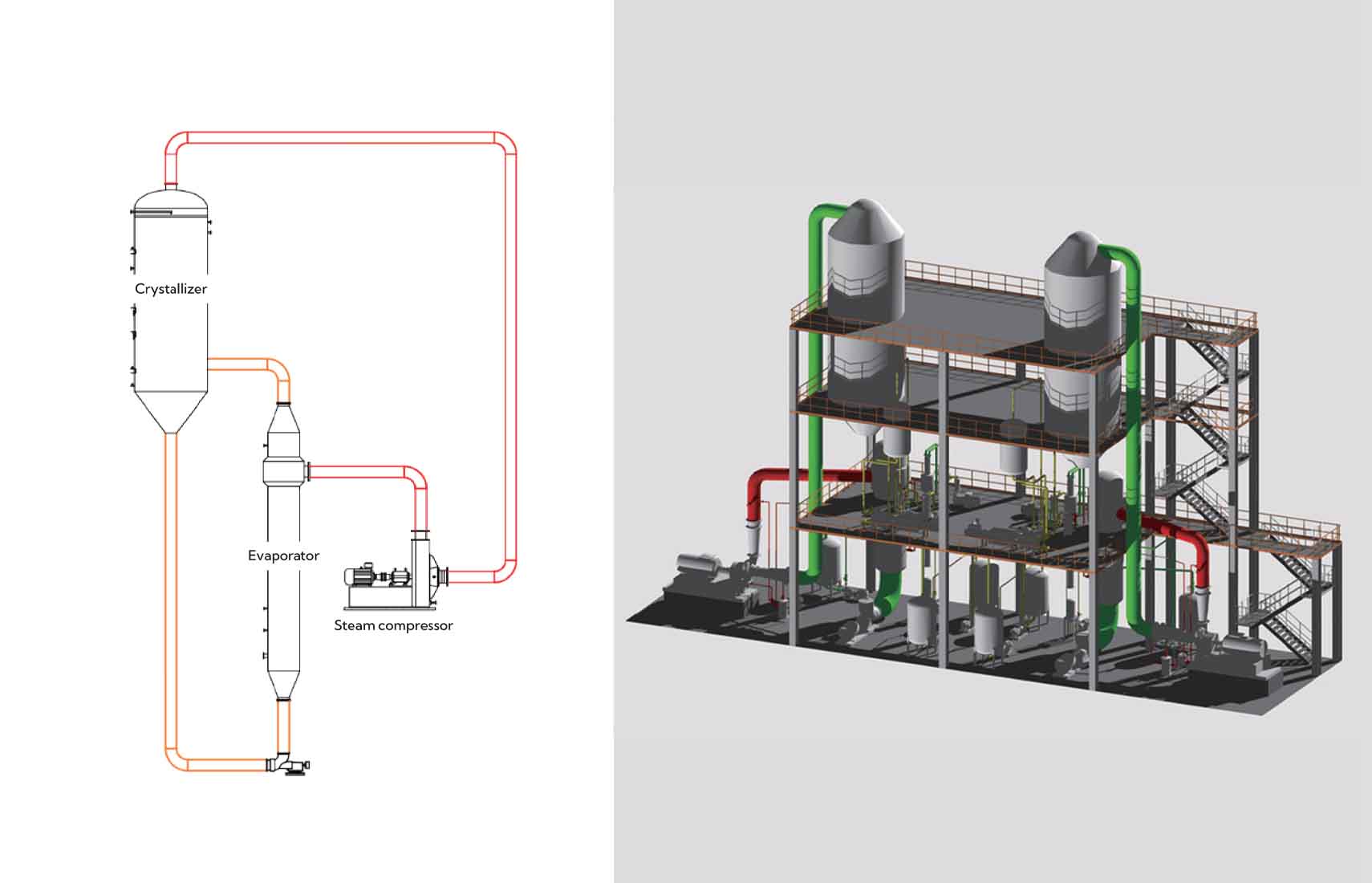
The process can appear simple from a flow diagram, but poor distribution or an incorrect evaporation temperature can affect the entire system. I normally connect the operating principle with practical design questions before discussing capacity or equipment configuration.
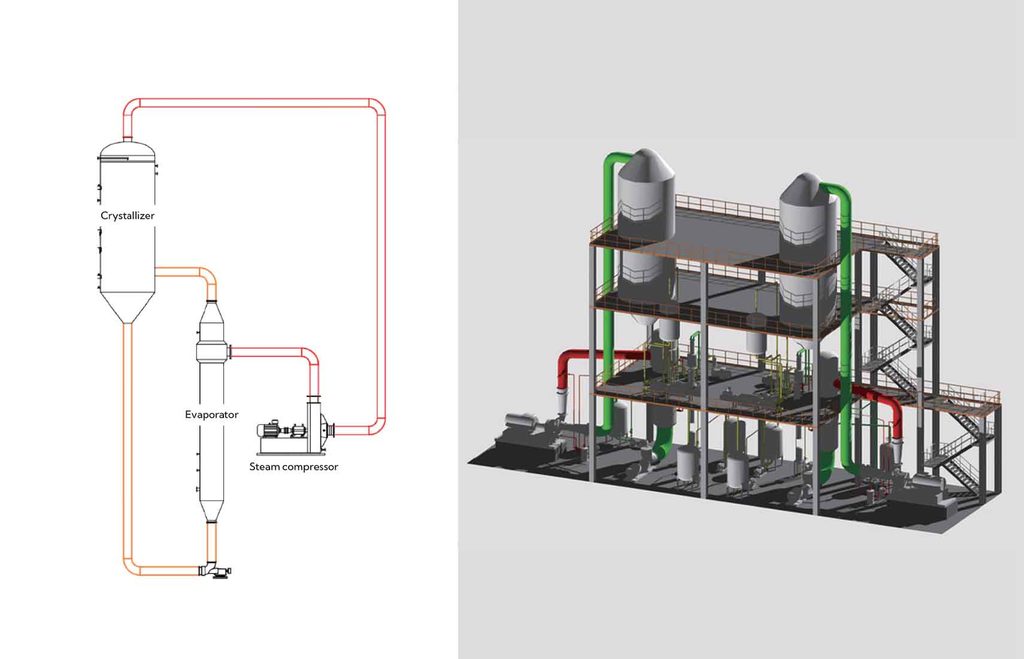
An MVR falling film evaporator distributes liquid over the inside of vertical heating tubes. Gravity pulls the liquid downward as a thin film. Heat causes part of the water or solvent to evaporate. A vapor compressor then raises the pressure and saturation temperature of the secondary vapor, allowing it to return as a heating medium. The separated concentrate leaves the system for further processing.
From secondary vapor to useful heat
In a conventional evaporator, secondary vapor may be condensed or used in another effect. In an MVR system, the compressor recycles much of that vapor. The system therefore replaces part of the fresh steam requirement with electrical energy for vapor compression.
The simplified sequence is:
1. The feed enters a distribution chamber.
2. The liquid forms a continuous film inside heated tubes.
3. Water or another volatile component evaporates.
4. A vapor separator removes entrained droplets.
5. The compressor increases vapor pressure and temperature.
6. Recompressed vapor heats the evaporator.
7. Concentrated liquid moves to the next stage or outlet.
This design depends heavily on stable liquid distribution. If some tubes receive too little liquid, local drying and scaling may occur. If other tubes receive too much liquid, heat transfer and residence-time control may suffer.
Why energy performance requires a project calculation
I avoid presenting MVR as automatically cheaper than steam-based evaporation. The economic result depends on:
🔸Electricity and steam prices
🔸Required evaporation temperature
🔸Feed throughput and operating schedule
🔸Boiling-point elevation
🔸Compressor efficiency
🔸Heat-transfer area
🔸Cooling-water and cleaning requirements
🔸Material concentration and viscosity
🔸The value of recovered water or product
For example, a site with relatively expensive electricity and inexpensive waste steam may obtain limited economic benefit from MVR. A site with continuous operation, suitable electricity pricing, and high steam costs may achieve a stronger business case. I would verify the result through a heat balance, material balance, compressor calculation, and lifecycle-cost comparison.
What Advantages Can an MVR Falling Film Evaporator Provide?
An MVR falling film evaporator can provide lower fresh-steam demand, continuous operation, short liquid residence time, and effective heat transfer. However, I treat these as conditional operating benefits. Correct feed distribution, fouling control, cleaning design, automation, and material compatibility determine whether the benefits appear in daily production.
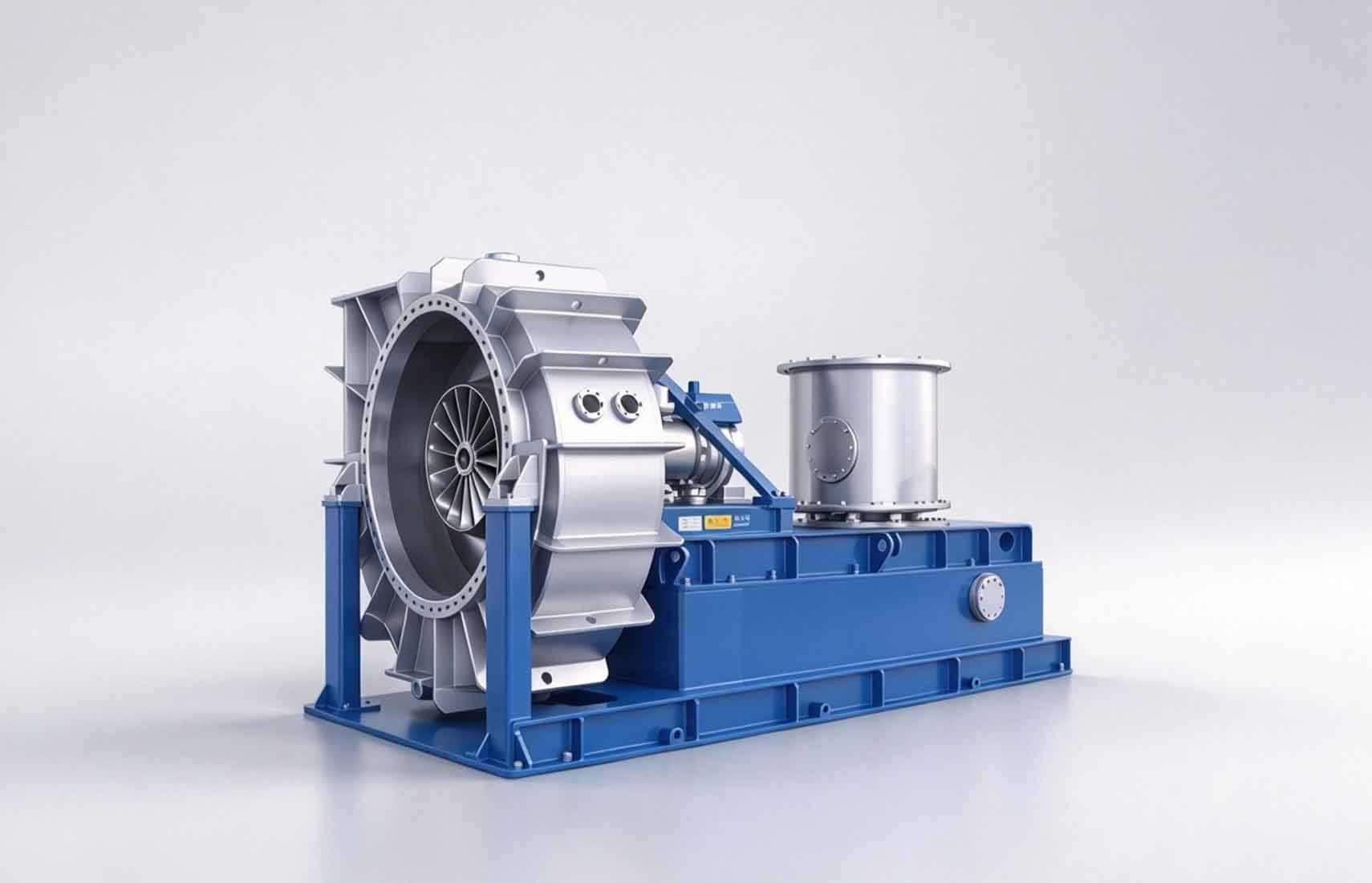
Lower fresh-steam demand
The most visible benefit is vapor reuse. The compressor raises the pressure of secondary vapor so that the vapor can continue transferring heat. This can reduce dependence on fresh steam, but the system still consumes electricity and may require startup steam or auxiliary heat.
I recommend comparing energy in a common unit, such as:
🔸Kilowatt-hours per tonne of evaporated water
🔸Fresh steam per tonne of evaporated water
🔸Total energy cost per operating hour
🔸Total energy cost per tonne of product or treated wastewater
This approach prevents a buyer from comparing only the nameplate steam demand.
Continuous and compact processing
A falling-film system can support continuous feeding and discharge. The thin liquid film also provides a relatively large heat-transfer area in a compact arrangement. Shorter residence time can help when the product is sensitive to heat or prolonged exposure.
These advantages depend on stable operation. A falling-film evaporator may become difficult to operate when the feed changes sharply in viscosity, solids content, foaming tendency, or temperature. Automatic control must coordinate feed flow, vapor pressure, compressor speed, separator level, and concentrate density.
Integration with crystallization and resource recovery
I often see the greatest value when evaporation is evaluated as one part of a larger process. An MVR falling-film unit may concentrate a solution before:
🔸Forced-circulation crystallization
🔸OSLO or DTB crystallization
🔸Cooling or freeze crystallization
🔸Solid-liquid separation
🔸Water recovery and reuse
🔸Salt separation in a ZLD system
The falling-film stage should not be forced to produce a final crystal if the material becomes too viscous or scaling-prone at high concentration. A combined route may provide better reliability than a single evaporator configuration.
| Potential benefit | Main condition for success |
| Lower fresh-steam use | Favorable electricity-to-steam economics |
| High heat-transfer efficiency | Stable film distribution and clean surfaces |
| Continuous operation | Reliable feed and concentrate control |
| Short residence time | Correct temperature and circulation design |
| Compact installation | Suitable material and manageable fouling |
| Downstream resource recovery | Compatible crystallization and separation steps |
Which Materials Suit an MVR Falling Film Evaporator?
Material suitability is the central selection question. I usually request information about viscosity, solids, scaling, foaming, heat sensitivity, solubility, and concentration changes before recommending a falling-film route. A dilute or moderately concentrated feed may be suitable, while a highly viscous or heavily scaling concentrate may require another technology.
Feed properties that require attention
Technical teams should collect measured data rather than rely on a general industry label. Important information includes:
🔸Feed flow rate and operating range
🔸Total dissolved solids and suspended solids
🔸Viscosity at different temperatures and concentrations
🔸Density and boiling-point elevation
🔸Corrosive ions and pH
🔸Scaling and crystallization behavior
🔸Foaming tendency
🔸Heat sensitivity and residence-time limits
🔸Desired concentrate or crystal quality
🔸Cleaning chemicals and available cleaning time
The final-effect condition deserves special attention. As water is removed, the concentrate may become much more viscous. Solubility may also decrease, causing crystals to form inside tubes or separators. A feed that behaves well at the inlet may become unsuitable near the outlet.
When falling-film evaporation may be challenging
I would carefully assess a falling-film design for materials with:
🔸Very high viscosity at the target concentration
🔸Rapid crystal formation inside heat-transfer tubes
🔸Severe calcium, sulfate, silica, or organic scaling
🔸Strong foaming or entrainment
🔸Unstable composition
🔸High suspended-solids content
🔸A requirement for intense mixing at high concentration
A forced-circulation evaporator may be more appropriate when the concentrate needs strong circulation and controlled supersaturation. A crystallizer may be necessary when the process objective includes solid production. In some cases, the best route combines falling-film evaporation for early concentration with forced circulation or crystallization for the later stage.
What I ask during supplier evaluation
I ask suppliers to explain the design basis, not only the nominal evaporation capacity. The buyer should request:
1. A documented material balance.
2. A heat and energy balance.
3. The assumed feed and concentrate properties.
4. Tube-side velocity and distribution method.
5. Expected fouling and cleaning strategy.
6. Compressor operating range.
7. Control and protection logic.
8. Materials of construction.
9. Testing or pilot-work requirements.
10. Clear performance boundaries and exclusions.
Suppliers should base guarantees on confirmed data and agreed test conditions. Buyers should verify certificates, references, and technical documents independently before relying on them.
Where are MVR Falling Film Evaporators Applied?
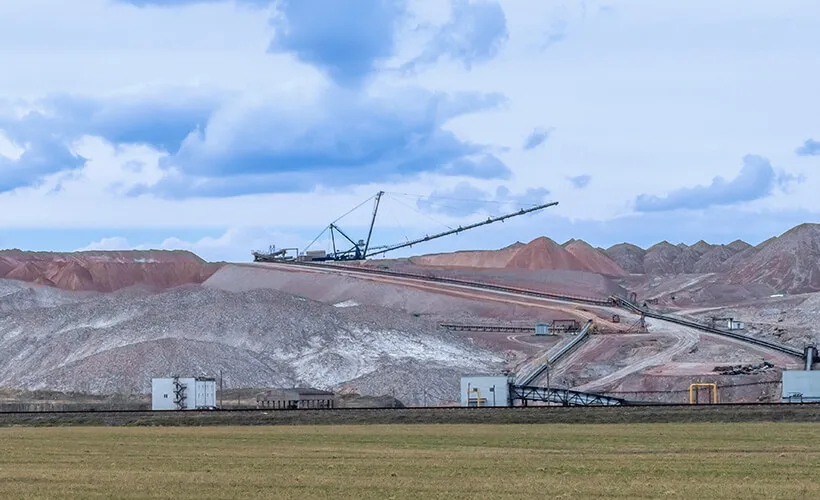
I see MVR falling-film systems used in several process industries, but the application objective changes from one sector to another. Chemical production may prioritize concentration and solvent or water recovery. Food and biotechnology customers may prioritize product quality. High-salt wastewater projects may prioritize fouling control, water recovery, and crystallization.
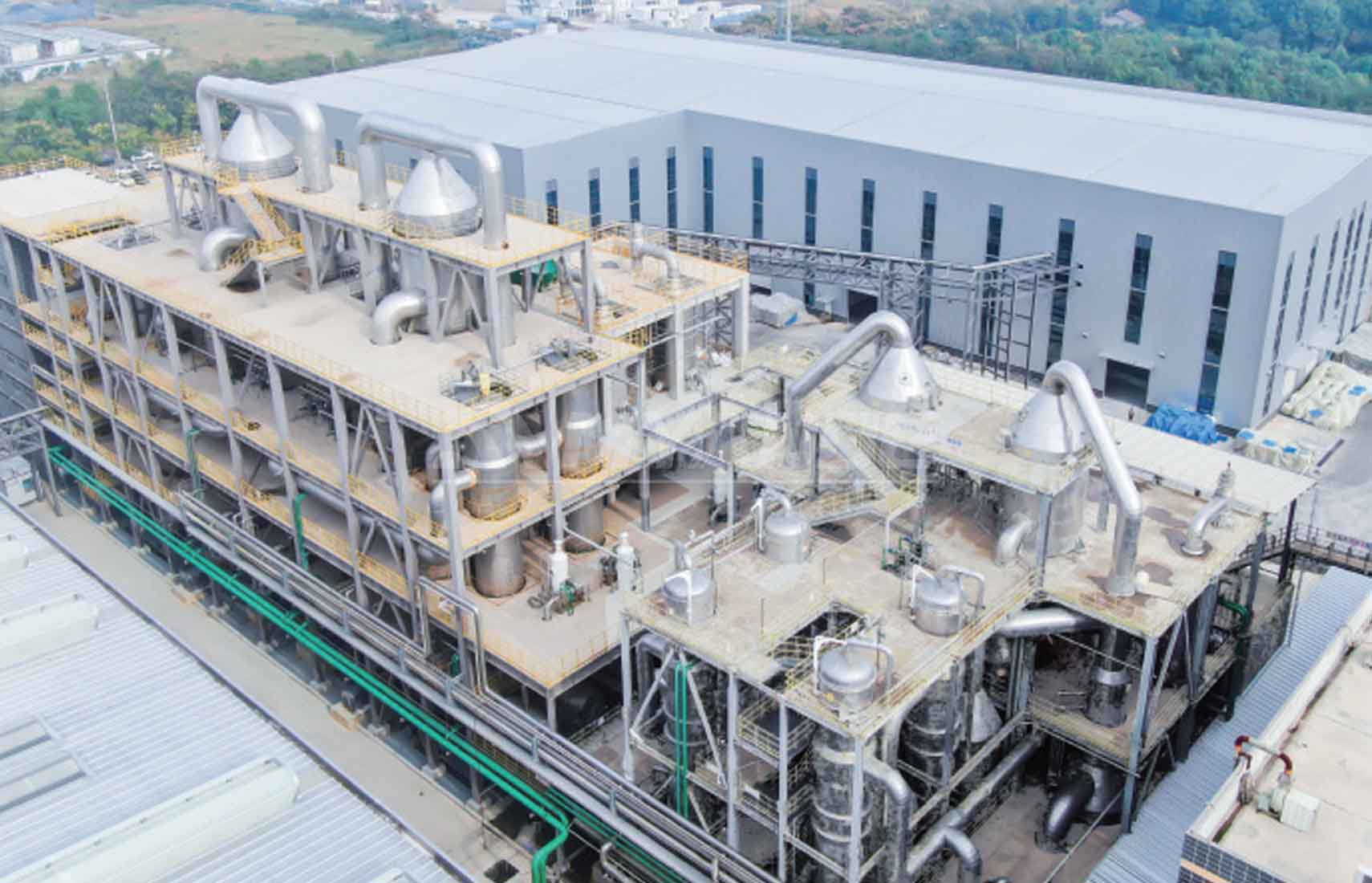
Chemical and new-materials production
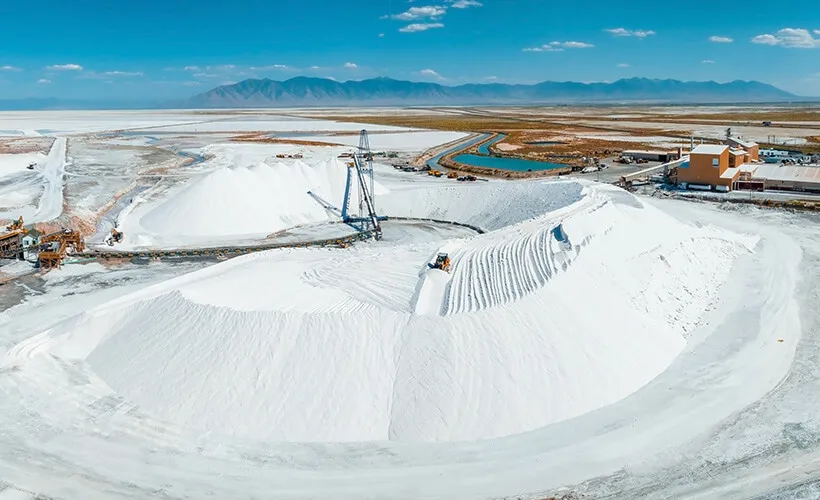
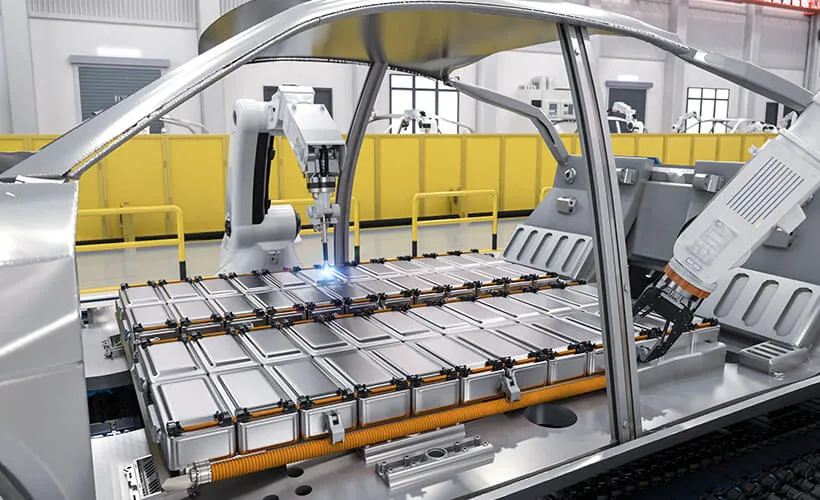
Chemical and new-materials plants may use evaporation to concentrate intermediates, recover water, or prepare a solution for crystallization. Lithium, battery-material, and inorganic-salt processes can contain chloride, sulfate, sodium, potassium, or lithium compounds.
In these projects, I would examine changing solubility and salt separation requirements. The evaporator may be only the first stage of a route that includes flash evaporation, cooling crystallization, forced circulation, or solid-liquid separation. The correct objective is often product yield and purity rather than maximum concentration in one machine.
High-salt wastewater and resource recovery
ZLD projects typically require water recovery and a controlled route for concentrate or salt. An MVR falling-film evaporator may reduce wastewater volume before crystallization, but it cannot solve every salt-management problem by itself.
I would evaluate:
🔸Tonne-by-tonne operating cost
🔸MVR electrical consumption
🔸Scaling cycle and cleaning frequency
🔸Mother-liquor management
🔸Salt separation performance
🔸Final solid disposal or reuse
🔸Corrosion and materials selection
If sodium chloride and sodium sulfate must be separated, the solubility system and crystallization route become central to design. A simple “high-salt wastewater” label is not enough.
Biotechnology, food, and agricultural processing
Biotechnology and food applications often require lower thermal stress, controlled residence time, and protection of color, flavor, or functional properties. Customers may process amino acids, organic acids, glucose, starch hydrolysate, fruit products, or fermentation broths.
Here, I would pay close attention to hygiene, cleaning validation, foaming, viscosity, and product concentration. Heat-transfer efficiency matters, but product quality may matter more than the smallest possible equipment footprint.
Agricultural-processing projects can involve variable feed composition and seasonal operation. The supplier should therefore examine turndown capacity, feed pretreatment, cleaning intervals, and automation. A design that works for one laboratory sample may not remain stable during full-scale production.
How Should Buyers Select an MVR Falling Film Evaporator Supplier?
A buyer should select the complete process solution, not only an evaporator body or nominal capacity. I recommend comparing process understanding, verified design data, manufacturing quality, automation, commissioning support, and lifecycle cost.
I use the following evaluation framework:
| Evaluation area | Questions for the supplier |
| Process analysis | Has the supplier reviewed representative material data? |
| Design basis | Are flow, concentration, temperature, and pressure assumptions documented? |
| Energy model | Does the calculation separate electricity, steam, water, and cleaning costs? |
| Fouling control | How will the system detect, prevent, and clean scaling? |
| Manufacturing | Can the supplier document inspection and quality-control procedures? |
| Integration | Can the supplier connect evaporation with crystallization, separation, and controls? |
| Project support | Who manages installation, commissioning, training, and troubleshooting? |
| Commercial risk | Are guarantees, exclusions, and acceptance tests clear? |
Myande approaches these projects as process-engineering assignments rather than simple equipment sales. Our work can include material analysis, process-route development, energy and material balances, equipment manufacturing, automation, system integration, commissioning, and operator training. I still recommend that each customer verify the proposed design through qualified technical review and, where necessary, laboratory or pilot testing.
Frequently Asked Questions
Is an MVR falling film evaporator always more energy efficient?
No. MVR can reduce fresh-steam demand by recycling secondary vapor, but it consumes electricity. The economic and energy result depends on electricity prices, steam prices, compressor performance, operating temperature, throughput, and material properties.
Can a falling-film evaporator process high-viscosity materials?
It can process some viscous feeds, but suitability usually decreases as viscosity rises during concentration. Poor film distribution, low heat-transfer performance, and blockage may occur. I would compare falling-film and forced-circulation options using measured viscosity data at operating concentrations.
Is MVR suitable for high-salt wastewater and ZLD?
MVR can be part of a ZLD system, especially for water reduction before crystallization. However, high salt content, scaling, corrosion, mother-liquor behavior, and final salt disposal require a complete process evaluation. MVR alone does not guarantee reliable ZLD operation.
What data should I provide before requesting a quotation?
I recommend providing feed flow, composition, temperature, concentration, viscosity, pH, suspended solids, scaling information, heat sensitivity, target concentrate, available electricity and steam, operating hours, and downstream requirements. Representative samples may also be necessary.
Should I choose equipment based on evaporation capacity?
No. Nominal capacity is only one design parameter. Buyers should compare energy consumption, concentration range, fouling behavior, cleaning requirements, materials, automation, integration, lifecycle cost, and documented performance under comparable conditions.
Conclusion
An MVR falling film evaporator can support efficient, continuous concentration when the material, operating window, and energy economics are suitable. I would not select it from an equipment name or capacity figure alone. I would first confirm feed properties, concentration behavior, scaling risk, heat sensitivity, energy prices, and downstream crystallization needs. Myande can help customers develop the process route, equipment package, automation, integration, commissioning, and training plan. Contact Myande with your material and operating data to begin a qualified technical evaluation.