

When I compare a falling film evaporator vs forced circulation evaporator, I often find that buyers are trying to solve the wrong problem. They may begin with equipment labels, but the real risks involve viscosity, fouling, crystallization, heat sensitivity, and final concentration. I use a material-first review to reduce the chance of selecting a system that looks economical but operates unreliably.
A falling film evaporator is often considered when the feed has suitable viscosity, limited solids, good flowability, and a low fouling tendency. A forced circulation evaporator may be more appropriate when the process involves high concentration, crystallization, suspended solids, high viscosity, or greater circulation requirements. The correct choice depends on material data, operating conditions, product requirements, and engineering validation rather than on a universal technology ranking.
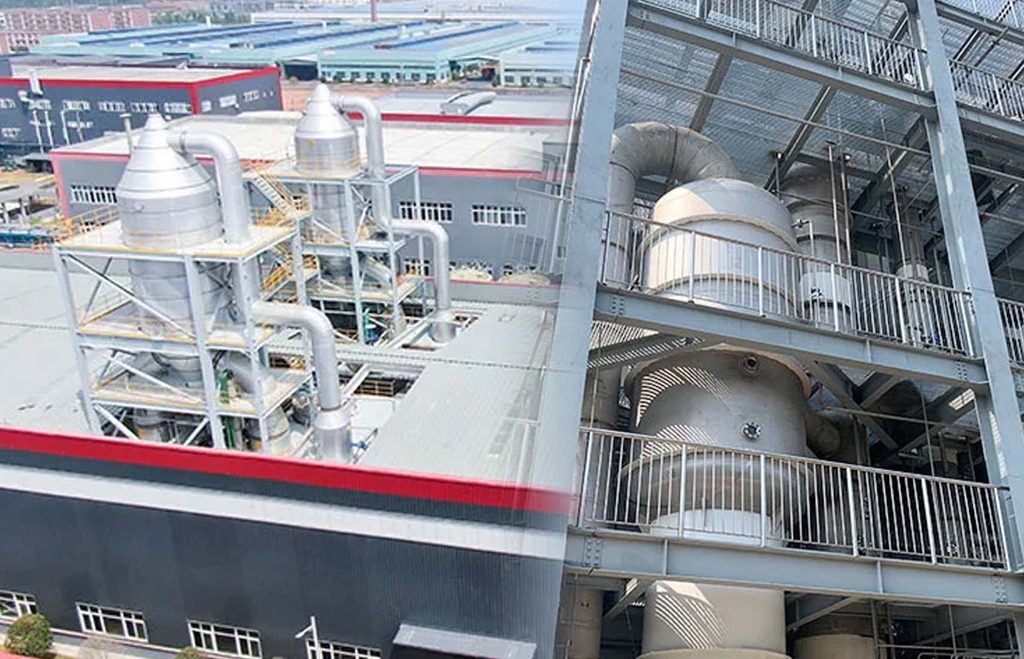
I usually explain this comparison as a risk-based process decision. The preferred evaporator can change as the material becomes more concentrated. The following framework helps technical managers and early-stage buyers identify which data matters before requesting a quotation.
How does a falling film evaporator work?
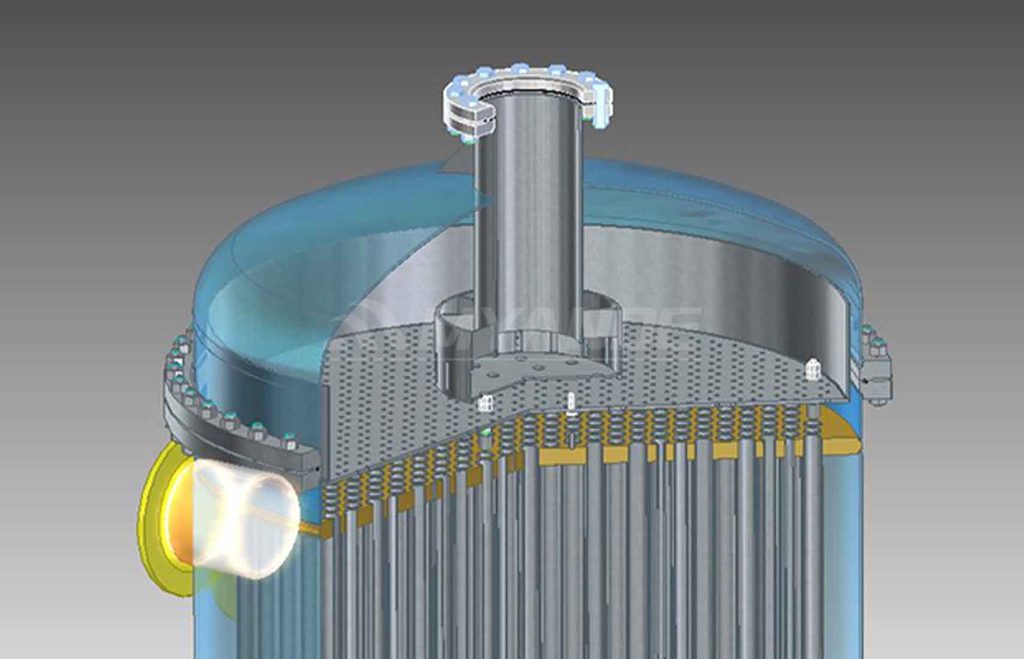
A falling film evaporator distributes liquid across the inside surface of vertical heating tubes. The liquid flows downward as a thin film while heat transfers through the tube wall. I generally associate this design with applications that need efficient heat transfer, short residence time, and relatively low liquid holdup.
A falling film evaporator uses gravity-driven liquid flow over heated surfaces. It can be attractive for low-viscosity or moderately concentrated feeds that remain easy to distribute and do not create severe deposits. The final decision still requires evaluation of viscosity, foaming, fouling, feed distribution, and thermal sensitivity.
Why thin-film operation can be attractive
In a falling film system, the liquid forms a thin layer on the heating surface. This arrangement can provide several potential benefits:
– Shorter residence time, which may help heat-sensitive products.
– Lower liquid inventory, depending on the system design.
– Efficient heat transfer when the film remains continuous and well distributed.
– Compact equipment arrangements for suitable process duties.
– Compatibility with multiple-effect evaporation or MVR systems, subject to project-specific design.
However, I do not treat these advantages as automatic guarantees. A thin film must remain stable across the entire heating surface. Poor distribution can create dry areas, local overheating, or uneven concentration. These problems can increase fouling and reduce effective heat-transfer performance.
What feed conditions should buyers review?
I ask buyers to provide material data at both the inlet and outlet conditions. A feed that behaves well at the beginning of evaporation may become difficult near the target concentration.
Important questions include:
1. What is the feed concentration and final target concentration?
2. How does viscosity change with temperature and concentration?
3. Does the material foam or entrain droplets?
4. Does the solution contain suspended solids?
5. Does the solute crystallize during evaporation?
6. Does the material form sticky, hard, or heat-sensitive deposits?
7. Can the liquid maintain a continuous film inside the tubes?
8. What cleaning method is acceptable for the plant?
I remember a customer discussion in which the initial request focused on evaporator capacity. After reviewing the intended outlet concentration, the more important concern became the sharp increase in viscosity near the final stage. That type of change can affect distribution, pumping, heat transfer, and cleaning. It is why I avoid recommending a falling film evaporator from capacity alone.
When a falling film system may require caution
A falling film evaporator may require additional review when the process has:
– Rapid viscosity growth during concentration.
– High salt content or a high supersaturation risk.
– Significant suspended solids.
– Strong fouling or scaling behavior.
– Unstable feed flow.
– A narrow operating window for thermal degradation.
– A need for continuous crystal suspension.
The supplier should confirm the design basis through process calculations, material evaluation, and, where necessary, pilot or laboratory work performed by qualified specialists. Buyers should ask which assumptions support the proposal and which performance points require later verification.
How does a forced circulation evaporator work?
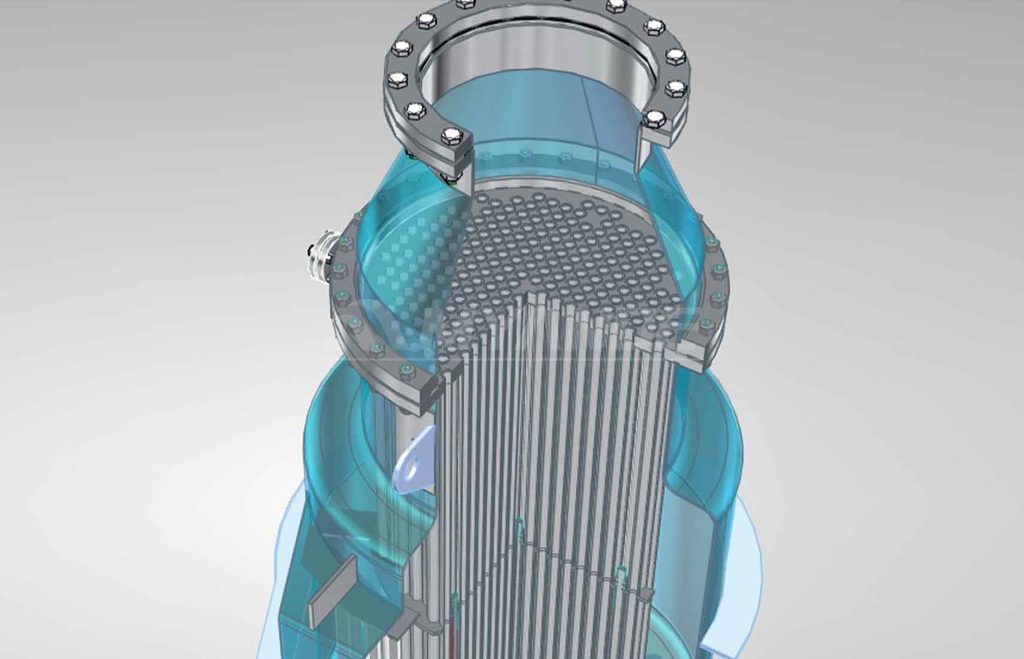
A forced circulation evaporator uses a circulation pump to move liquid through a heat exchanger at a controlled velocity. The liquid is heated under pressure and then enters a flash vessel or separator, where part of the solvent vaporizes. I usually consider this arrangement when circulation, solids handling, or crystallization control becomes more important than a simple thin-film layout.
A forced circulation evaporator continuously pumps process liquor through a heater and separator. This approach can support concentrated, viscous, fouling, or crystallizing materials because the system controls circulation independently of gravity-driven film flow.
Why circulation can reduce process risk
Forced circulation gives the design team more control over liquid velocity and heat-transfer conditions. The circulation loop can help maintain movement through the heat exchanger even when the process liquor becomes concentrated or contains solids.
Potential benefits include:
– Better handling of high-concentration liquor.
– Greater flexibility for viscous materials.
– Improved tolerance for some fouling or crystallization duties.
– A practical arrangement for crystal suspension.
– Easier integration with crystallizers such as FC, OSLO, or DTB systems in suitable applications.
– More direct control of circulation through pump selection and operating conditions.
These benefits also introduce costs and design considerations. A forced circulation system normally requires pumps, piping, controls, and additional operating power. Pump selection must account for viscosity, solids content, temperature, corrosion, erosion, and mechanical seal requirements. I therefore compare total lifecycle cost rather than only the initial equipment price.
What problems can still occur?
Forced circulation does not eliminate scaling, plugging, or corrosion. A process can still fail if the designer does not understand solubility, supersaturation, crystal growth, or deposit behavior.
I encourage buyers to ask:
– Where will crystals form?
– How will solids leave the circulation loop?
– What is the acceptable crystal size and product purity?
– Can the heat exchanger be isolated and cleaned?
– How will the pump handle the expected solids concentration?
– What happens during startup, shutdown, and low-load operation?
– Does the design include a suitable purge or blowdown arrangement?
A supplier may describe a system as suitable for high-salt wastewater or resource recovery, but the buyer should connect that statement to the actual feed composition. Certifications, quality documents, material certificates, and compliance records should also be requested and independently verified during procurement.
Falling film evaporator vs forced circulation evaporator: which material risks matter most?
The most useful comparison between a falling film evaporator and forced circulation evaporator starts with the process risks that change during evaporation. I do not ask only which unit has better heat transfer. I ask which design offers a manageable operating window for the actual feed and final product.
A falling film evaporator may fit a clean, flowable, low-fouling feed, while a forced circulation evaporator may better fit a concentrated, viscous, crystallizing, or solids-bearing liquor. Buyers should compare the full concentration path, not just the inlet material, because the outlet condition often determines reliability and maintenance requirements.
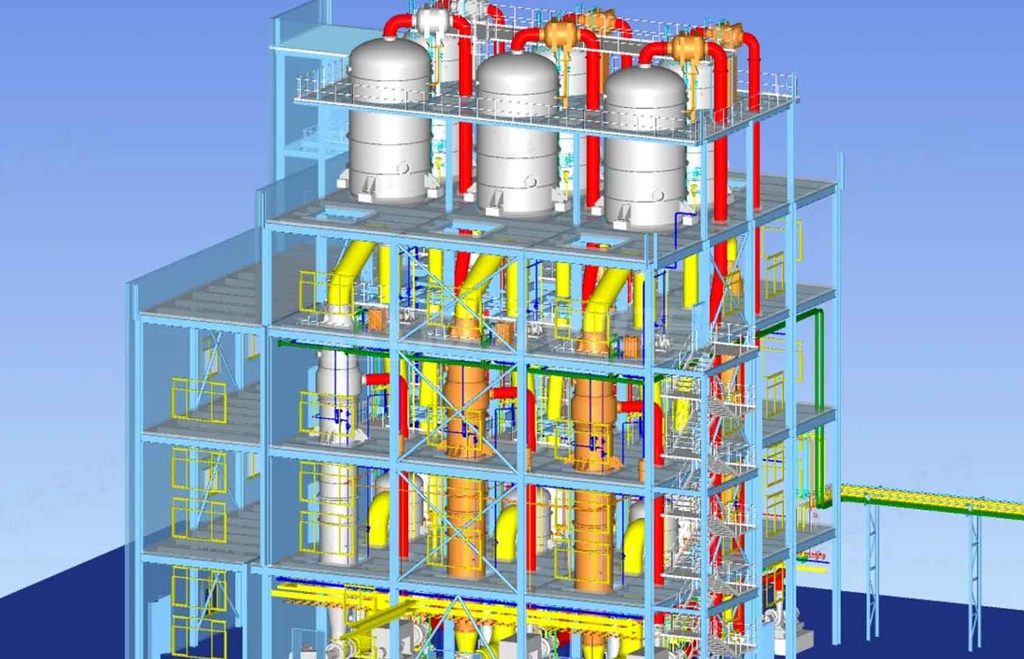
Practical comparison table
| Evaluation factor | Falling film evaporator | Forced circulation evaporator |
| Liquid distribution | Depends strongly on uniform film formation | Depends more on pump and circulation design |
| Low-viscosity feed | Often favorable | Technically possible but may add unnecessary circulation |
| High viscosity | May become difficult near the outlet | Often more adaptable, subject to pump design |
| Crystallization | Requires careful review of crystal formation and blockage risk | Often considered for crystallizing or solids-bearing duties |
| Fouling | Sensitive to poor wetting, hot spots, and deposits | Circulation velocity may help, but fouling is not eliminated |
| Heat-sensitive products | Short residence time may be beneficial | Flash separation can also support controlled evaporation |
| Energy evaluation | Depends on effects, MVR, temperature lift, and design | Includes circulation-pump power as well as thermal energy |
| Maintenance | Distribution devices and tubes require inspection | Pumps, seals, heaters, piping, and separators require attention |
| Product crystals | May need a separate crystallization stage | Can integrate with crystallization in suitable designs |
This table supports initial screening, not final selection. I would not use it as a substitute for a material balance, heat balance, solubility review, or equipment engineering.
The final concentration often changes the answer
Many early requests describe a relatively dilute feed but focus on the desired final concentration. I treat that final point as a warning signal. The liquor may become more viscous, more corrosive, more supersaturated, or more likely to form deposits as water or solvent is removed.
For example, a food or biomanufacturing stream may begin as a pumpable solution but become sticky near the outlet. A chemical or lithium-related stream may remain fluid but approach a crystallization boundary. Industrial wastewater may contain salts that concentrate unevenly and create scaling in an unexpected location.
I recommend mapping the process in stages:
1. Feed concentration and temperature.
2. Intermediate concentration and viscosity.
3. First appearance of crystals or solids.
4. Target outlet concentration.
5. Required product or mother-liquor condition.
6. Cleaning and restart requirements.
This map helps determine whether the process should use one evaporation technology or a combination. A project may use falling film evaporation for an earlier concentration range and forced circulation or crystallization equipment for the later stage. Myande’s engineering discussions commonly evaluate combinations of MVR, multiple-effect evaporation, forced circulation, and crystallization according to the material path.
What data should you provide before requesting an evaporator quotation?
A weak quotation request often includes only feed flow and target concentration. That information is not enough for a reliable falling film evaporator or forced circulation evaporator comparison. I advise buyers to prepare a structured process data sheet before asking suppliers to recommend a technology.
A useful quotation package includes feed composition, operating conditions, product requirements, cleaning expectations, energy prices, and environmental targets. The supplier can then compare process routes using material balances, heat balances, equipment sizing, and lifecycle considerations.
Minimum material and process data
I would request the following information:
– Feed flow rate, including normal, minimum, and maximum values.
– Solute composition and expected impurities.
– Inlet temperature and pressure.
– Feed concentration and required outlet concentration.
– Viscosity across the operating temperature range.
– Density, boiling-point elevation, and vapor pressure where available.
– Solubility data and crystallization behavior.
– Suspended solids, particle size, and abrasiveness.
– Fouling, scaling, foaming, and corrosion observations.
– Product purity, crystal size, moisture, or recovery requirements.
– Available steam, electricity, cooling water, and vacuum conditions.
– Cleaning chemicals, cleaning frequency, and acceptable downtime.
– Applicable safety, environmental, and local regulatory requirements.
If some data is unavailable, I mark it as an assumption rather than presenting it as a confirmed fact. I also recommend discussing whether sampling, bench testing, pilot evaluation, or qualified third-party analysis is needed.
How should buyers evaluate suppliers?
Technology selection is only one part of procurement risk. I also review the supplier’s ability to translate a process concept into a complete, supportable system.
Key supplier questions include:
– Does the supplier have experience with similar materials?
– Can the supplier explain the proposed process route clearly?
– Does the proposal include a material and energy balance?
– Which performance figures are guaranteed, and which require verification?
– How will the supplier manage fouling, scaling, and cleaning?
– Who manufactures the heat exchangers, pumps, separators, and controls?
– What quality-control records and material certificates will be provided?
– What installation, commissioning, training, and spare-parts support is included?
– Can the supplier integrate MVR, automation, crystallization, or ZLD equipment where required?
– Are certifications and compliance documents available for buyer verification?
I once saw a technical discussion move from “Which evaporator is cheaper?” to “What is the cost of one unplanned cleaning event?” That change in perspective is valuable. A lower CAPEX option may create higher labor, downtime, wastewater, or product-loss costs. I encourage project owners to compare CAPEX, OPEX, maintenance, uptime assumptions, and lifecycle cost together.
Frequently Asked Questions
Is a falling film evaporator more energy-efficient than a forced circulation evaporator?
Neither technology is automatically more energy-efficient. Energy use depends on evaporation load, temperature difference, heat-transfer area, steam economy, MVR integration, circulation-pump power, vacuum conditions, and material properties. I recommend comparing project-specific heat and energy balances instead of relying on general technology claims.
Is a forced circulation evaporator only used for crystallization?
No. A forced circulation evaporator can serve concentrated or fouling liquids even when the final product is not a crystal. Its value comes from controlled liquid circulation and separation. The supplier should still confirm pump suitability, heat-transfer conditions, cleaning access, and the expected solids or viscosity range.
Can one system combine falling film and forced circulation evaporation?
Yes, a combined process can be considered when material properties change substantially during concentration. A falling film stage may handle a more dilute, flowable feed, while a forced circulation or crystallization stage manages the concentrated liquor. Engineers should verify the transition point through process data and design calculations.
What is the most important data for choosing between the two evaporators?
I consider the concentration-dependent viscosity, fouling tendency, crystallization behavior, suspended solids, heat sensitivity, and final product requirement especially important. Flow rate alone cannot determine the appropriate technology. Buyers should provide data from the full evaporation path, including the target outlet condition.
Should I request a pilot test before purchasing?
A pilot or laboratory evaluation may be appropriate for unfamiliar, high-risk, or highly variable materials. The need depends on fouling uncertainty, crystallization behavior, product sensitivity, and the commercial consequences of unstable operation. A qualified process specialist should define the test objectives and interpret the results.
Conclusion
The falling film evaporator vs forced circulation evaporator decision should begin with material behavior, not equipment preference. I evaluate how concentration, viscosity, fouling, crystallization, solids, heat sensitivity, and product requirements change throughout the process. Falling film technology may suit flowable, low-fouling feeds, while forced circulation may offer greater flexibility for concentrated or crystallizing liquors. Before selecting a supplier, request a transparent process basis, lifecycle evaluation, quality documents, and clearly stated verification requirements. Contact Myande to discuss your material data and develop a project-specific evaporation and crystallization route.